
Michael Eric Dyson
 highly-reviewed
About Michael Eric Dyson


“Overall it was outstanding!”
Speech topics
Race, Racism & Race Relations in America
Speaking videos
Media coverage
Parsing Barack Obama’s legacy
One wishes author had a touch more compassion for the man who fulfilled the dream
Books by Michael Eric Dyson
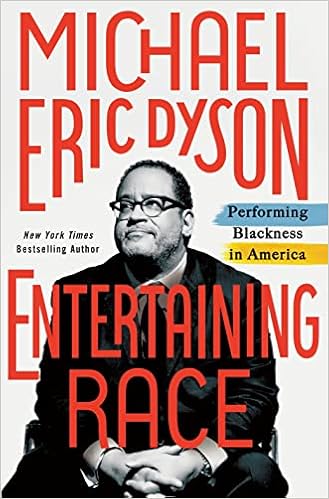
“Entertaining Race: Performing Blackness in America” (2021)
Entertaining Race: Performing Blackness in America

“What Truth Sounds Like: Robert F. Kennedy, James Baldwin, and Our Unfinished Conversation About Race in America” (2018)
A stunning follow up to New York Times bestseller Tears We Cannot StopHarry Belafonte says: “Dyson has finally written the book I always wanted to read. I had the privilege of attending the meeting he has insightfully written about, and it’s as if he were a fly on the wall...a tour de force...a poetically written work that calls on all of us to get back in that room and to resolve the racial crises we confronted more than fifty years ago.”Joy-Ann Reid says: A work of searing prose and seminal brilliance... Dyson takes that once in a lifetime conversation between black excellence and pain and the white heroic narrative, and drives it right into the heart of our current politics and culture, leaving the reader reeling and reckoning."Robin D. G. Kelley says:“Dyson masterfully refracts our present racial conflagration through a subtle reading of one of the most consequential meetings about race to ever take place. In so doing, he reminds us that Black artists and intellectuals bear an awesome responsibility to speak truth to power."President Barack Obama says: "Everybody who speaks after Michael Eric Dyson pales in comparison.”In 2015 BLM activist Julius Jones confronted Presidential candidate Hillary Clinton with an urgent query: “What in your heart has changed that’s going to change the direction of this country?” “I don’t believe you just change hearts,” she protested. “I believe you change laws.”The fraught conflict between conscience and politics – between morality and power – in addressing race hardly began with Clinton. An electrifying and traumatic encounter in the sixties crystallized these furious disputes.In 1963 Attorney General Robert Kennedy sought out James Baldwin to explain the rage that threatened to engulf black America. Baldwin brought along some friends, including playwright Lorraine Hansberry, psychologist Kenneth Clark, and a valiant activist, Jerome Smith. It was Smith’s relentless, unfiltered fury that set Kennedy on his heels, reducing him to sullen silence.Kennedy walked away from the nearly three-hour meeting angry – that the black folk assembled didn’t understand politics, and that they weren’t as easy to talk to as Martin Luther King. But especially that they were more interested in witness than policy. But Kennedy’s anger quickly gave way to empathy, especially for Smith. “I guess if I were in his shoes…I might feel differently about this country.” Kennedy set about changing policy – the meeting having transformed his thinking in fundamental ways.There was more: every big argument about race that persists to this day got a hearing in that room. Smith declaring that he’d never fight for his country given its racist tendencies, and Kennedy being appalled at such lack of patriotism, tracks the disdain for black dissent in our own time. His belief that black folk were ungrateful for the Kennedys’ efforts to make things better shows up in our day as the charge that black folk wallow in the politics of ingratitude and victimhood. The contributions of black queer folk to racial progress still cause a stir. BLM has been accused of harboring a covert queer agenda. The immigrant experience, like that of Kennedy – versus the racial experience of Baldwin – is a cudgel to excoriate black folk for lacking hustle and ingenuity. The questioning of whether folk who are interracially partnered can authentically communicate black interests persists. And we grapple still with the responsibility of black intellectuals and artists to bring about social change.What Truth Sounds Like exists at the tense intersection of the conflict between politics and prophecy – of whether we embrace political resolution or moral redemption to fix our fractured racial landscape. The future of race and democracy hang in the balance.

“Tears We Cannot Stop: A Sermon to White America” (2017)
NOW A NEW YORK TIMES, PUBLISHER'S WEEKLY, INDIEBOUND, LOS ANGELES TIMES, WASHINGTON POST, CHRONICLE HERALD, SALISBURY POST, GUELPH MERCURY TRIBUNE, AND BOSTON GLOBE BESTSELLER | NAMED A BEST/MOST ANTICIPATED BOOK OF 2017 BY: The Washington Post • Bustle • Men's Journal • The Chicago Reader • StarTribune • Blavity • The Guardian • NBC New York's Bill's Books • Kirkus • Essence“One of the most frank and searing discussions on race ... a deeply serious, urgent book, which should take its place in the tradition of Baldwin's The Fire Next Time and King's Why We Can't Wait." ―The New York Times Book ReviewToni Morrison hails Tears We Cannot Stop as "Elegantly written and powerful in several areas: moving personal recollections; profound cultural analysis; and guidance for moral redemption. A work to relish." Stephen King says: "Here’s a sermon that’s as fierce as it is lucid…If you’re black, you’ll feel a spark of recognition in every paragraph. If you’re white, Dyson tells you what you need to know―what this white man needed to know, at least. This is a major achievement. I read it and said amen."Short, emotional, literary, powerful―Tears We Cannot Stop is the book that all Americans who care about the current and long-burning crisis in race relations will want to read.As the country grapples with racist division at a level not seen since the 1960s, one man's voice soars above the rest with conviction and compassion. In his 2016 New York Times op-ed piece "Death in Black and White," Michael Eric Dyson moved a nation. Now he continues to speak out in Tears We Cannot Stop―a provocative and deeply personal call for change. Dyson argues that if we are to make real racial progress we must face difficult truths, including being honest about how black grievance has been ignored, dismissed, or discounted. "The time is at hand for reckoning with the past, recognizing the truth of the present, and moving together to redeem the nation for our future. If we don't act now, if you don't address race immediately, there very well may be no future."

“The Black Presidency: Barack Obama and the Politics of Race in America” (2016)
FAQs on Michael Eric Dyson
 At a glance
Michael Eric Dyson

Recommended offer:
Connect with an event specialist:
Get StartedBrowse Similar Speakers
Speaker Search is a marketplace of speakers designed for talent buyers. We do not represent or manage speakers; instead, we provide event planners with the most comprehensive resource to discover the right talent.